Wonders of India • September 14, 2020
The Mahayogisvara at Elephanta - A tale in the stone
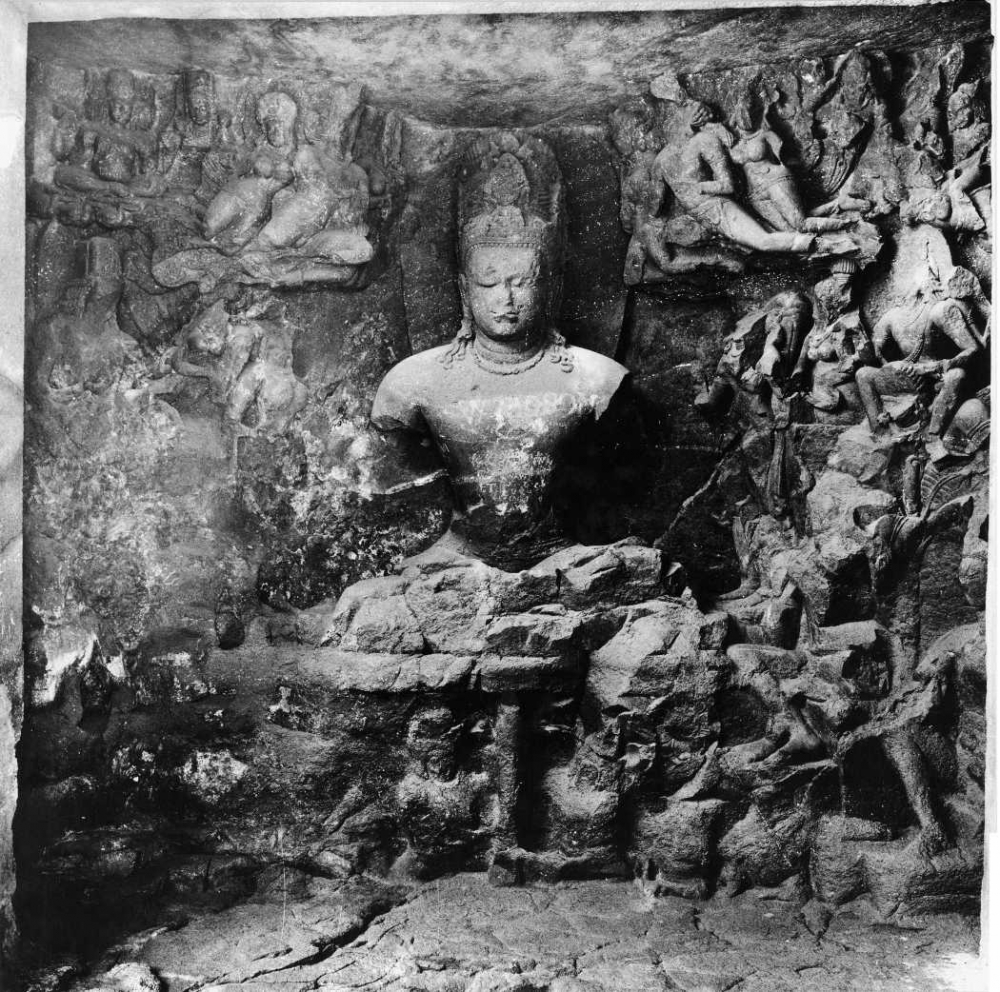
The sculptures in the main cave at Elephanta or Gharapuri near Bombay are most remarkable. They are known for the beauty of design, the vigorous expression, their symmetry and proportionate features. There are various stories from Shiva's life such as his marriage, Ardha-NariNateshwara form has been depicted in the cave. Another important form of Shiva is his yogi form.
The sculpture is to the visitor's left as he enters the main cave. The God is seated in padmasana on a throne supported by Naga-rajas or cobras in human form. His locks are hanging over his shoulders while behind him is seen the frill. He wears a girdle with a jewel in front carved in imitation of the latest Gupta style, a necklace of diamonds, a head ornament and crown.
The aureole signifies that the figure is superhuman. The sculpture is ten feet and ten inches high. To visitor's right, Vishnu with a mace in his hand is riding on Garuda in human form. The latter has a coil of a serpent round his head. Though be is the king of vultures and as such is sure to kill it, he has forgotten his enmity and has formed a friendship with it.
To the visitor's left is seen Brahman riding on holy geese. Above the canopy are Gandharvas and Apsaras flying and vying with one another in doing homage to God. From the artistic point of view, the delineation of the clouds and of the plantain tree deserves special mention. The seated figure is very often mistaken by visitors as one of Buddha. But it must be remembered that it is in a Shaivaite temple of the Smarta sect.
The position of it is so much in unison with one of Buddha that there is no wonder if visitors, not familiar with Hindu mythology, take it for that of the latter. There is small doubt that it is 'a copy of a figure of Buddha in the 'sane attitude.
In Hindu mythology, there is an interesting episode in Shiva's life which led the artists to imitate A model of a kindred religion. Daksha, Shiva's father-in-law, quite ignored the latter and 'even his own daughter Sati, gives the first Wife, for the simple 'reason that they led poor ascetics' lives.
The relations were so 'far stretched that they were not invited to sacrifice. Sati took this to heart and in a fit of Anger burned herself. Upon this Shiva turned A great ascetic Mahayogi hereafter called the Mahayogisvara. The gods were 'extremely anxious. They were afraid everything might come to a standstill, Shiva being 'the sustainer of the world. 'They decided to wait upon him mid to seize a 'favourable opportunity of requesting him to look to 'the welfare of mankind. The panel is the representation of this legend.
Original Source
This post is sourced from School of Indian History and can also be read on the source page.
Read the full article on School of Indian History