Wonders of India • October 29, 2020
The lotus Mahal in Hampi - a fine example of Indo-Saracenic architecture
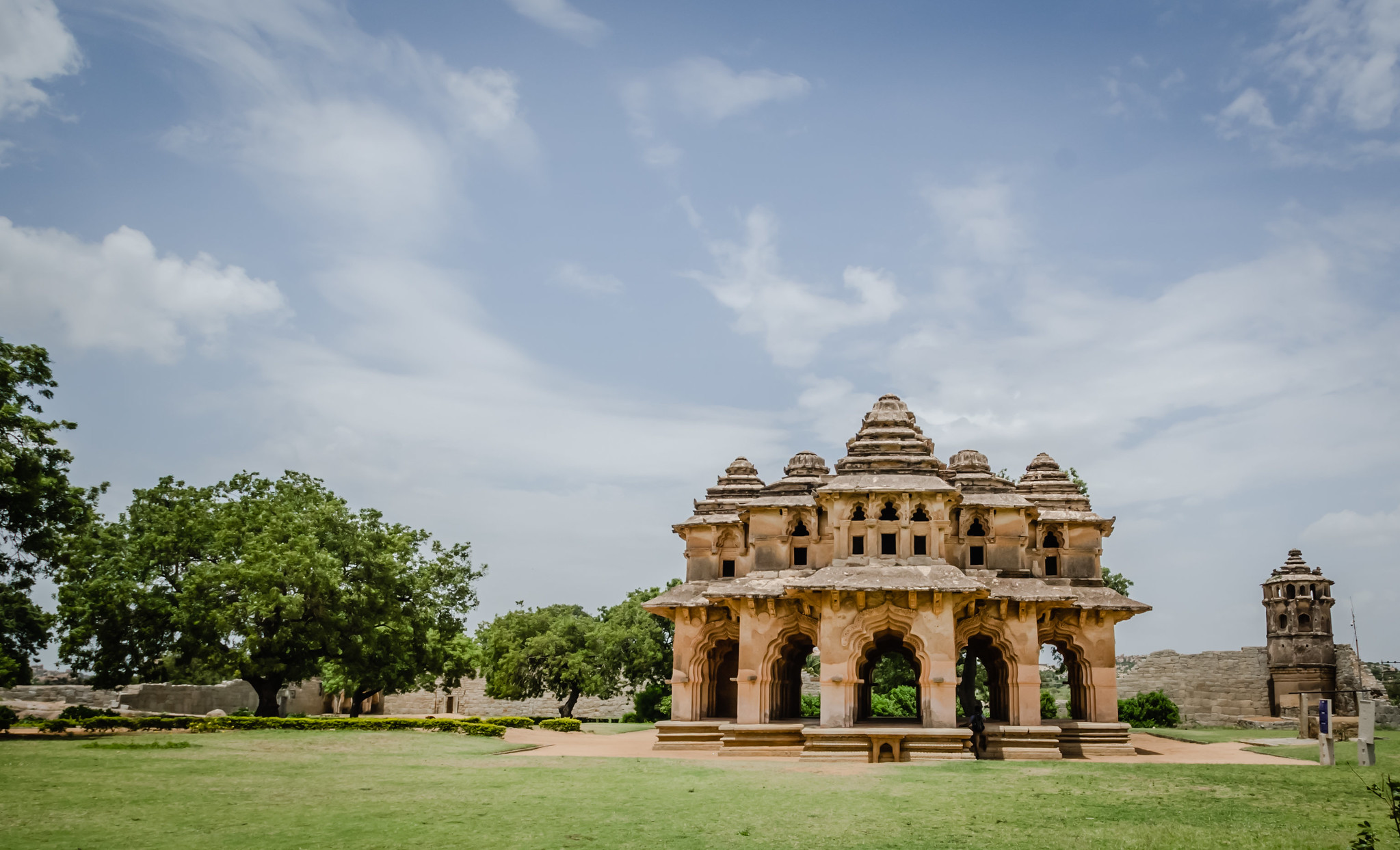
The finest building in the Zenana Enclosure in Hampi is the Lotus Mahal which is a fine example of Indo-Saracenic architecture at its best.
It is a pretty little pavilion with an upper storey and contains some excellent stucco ornament. To judge from the clumsy manner in which the staircase to the upper storey has been built, one would imagine that it had been added as an afterthought. It looks as though the architect forgot the staircase when preparing the design and had to provide one after the building was completed.
The ground floor is raised as usual on a high and ornamental stone basement but with doubly recessed angles which makes the plan of the building peculiar, a feature which, perhaps, gave rise to its singular appellation. This pavilion is open on all sides and provided with massive pillars and arches supporting the room above which is reached by the flight of steps on the north side.
The upper room is provided with numerous little windows on all sides, each window originally having little wooden shutters, a feature which we do not find in any other building here, and one which tends to strengthen the conjecture that these buildings do really represent those of the Zenana. While the pillars and, arches are Muhammadan in character, the base, roof, cornice and stucco ornament are Hindu in design.
It is an interesting and not unpleasant blending of these two different styles and a fine example of Indo-Saracenic architecture. In the south-west corner of the enclosure is a little pavilion situated in the middle of a small tank or swimming bath. On the east side, close to the main entrance, is a building which in all probability was used as a guard-room, or quarters for the female guards mentioned by the Portuguese travellers. Just outside the enclosure, on the south side, is the small temple of Ranga containing a large stone image of Hanuman some nine feet high.
Original Source
This post is sourced from School of Indian History and can also be read on the source page.
Read the full article on School of Indian History