Wonders of India • September 10, 2020
The fort where Mughals were fooled!!
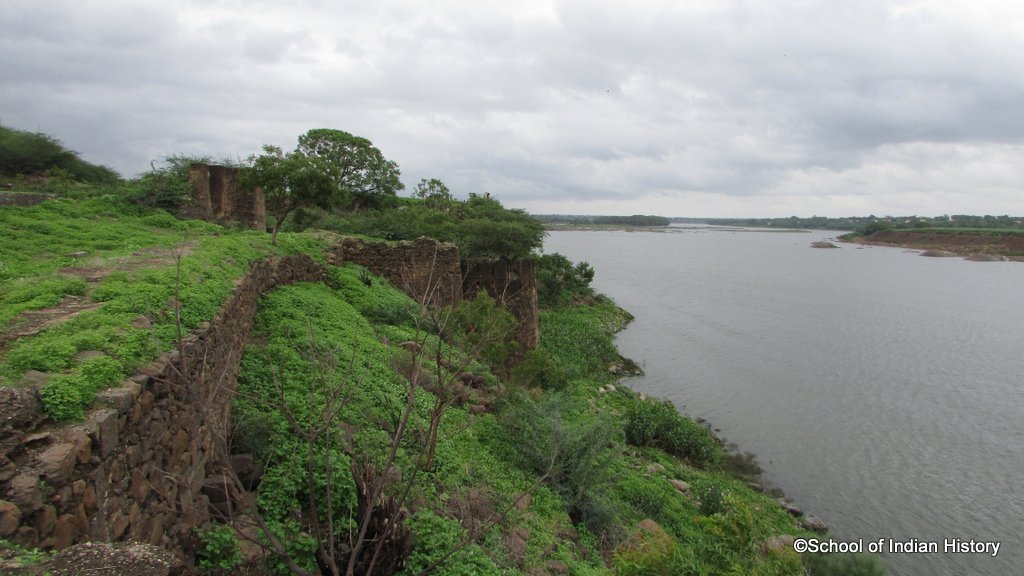
Bahadurgad is a land fort is located on the north bank of river Bhima in Shrigonde taluka of Ahmednagar district. The extension of the fort is huge and you can see the fortifications built on all sides of the fort. There are five gates to enter the fort and the main road passes through Pedgaon village. As the road goes up to the gate of the fort, you enter the fort directly.
Bahadur Khan, the southern subedar of the Mughals, had encamped at Pedgaon on the banks of the river Bhima in the rainy season of 1672 AD. Bahadur Khan is Aurangzeb's half-brother. Aurangzeb had given him the title of Kokaltash. While residing at Pedgaon, Bahadur Khan built Bhuikot fort and renamed it as Bahadurgad. The story of Chhatrapati Shivaji Maharaj's contempt for Bahadurgarh is famous in history and it is quite interesting too!
Once, Shivaji Maharaj, founder of the Maratha Empire got the news that 200 first-rate Arab horses along with some riches had reached Bahadurgad. Bahadur Khan kokaltash was the commander of the fort at that time. Shivaji Maharaj planned to loot those good quality horses and the riches. He managed a force of around 9000 troops and split it into two- one of 2000 and the other of 7000. Bahadur Khan came to know about the proposed raid of Shivaji Maharaj hence he prepared his force and kept the gates of fort open. However, Shivaji Maharaj himself had arranged for the leaking of Marathas' plan of attacking Bahadurgad. The news was spread with intent only. Accordingly, 2000 Marathas entered the fort through the front gate. The watchful Mughals attacked the Marathas. However, Marathas were not interested in fighting and retreated as they had planned. Bahadur Khan started chasing them. This was exactly what Shivaji Maharaj wanted. The fort was left defenceless. The second batch of 7000 Marathas attacked Bahadurgad. They quickly got hold of the 200 Arab horses and the riches and fled. Moreover, Bahadur Khan could not catch hold of the retreating Marathas known for their speed and highly mobile nature of operations. Marathas were successful in deceiving Bahadur Khan and the Mughal forces. This was a classic guerilla warfare technique used by Shivaji Maharaj and Bahadur Khan was fooled easily. Even after this incident, Bahadurgad remained with Mughals.
In 1689, Sambhaji Raja and poet Kalash were captured alive at Sangameshwar in Konkan by Mughal Sardar Mukarrabkhan. After that, Sambhaji Raje and his advisor poet Kalash were brought to Bahadurgarh before Aurangzeb. On this fort, Aurangzeb inflicted innumerable hardships on Sambhaji kings and poet Kalash. After the fort of Ahmednagar was conquered by Nanasaheb Peshwa in 1759, Bahadurgarh was conquered by Sadashivrao, the Peshwa's brother. Later this fort remained in the possession of Marathas till 1818.
Entering from Pedgaon village, one can see the grand arch of the door. Numerous remains are scattered inside the fort to this day. Today, it is not possible to see many ruins in the fort. Bahadurgarh is famous for its Yadava period temples. Of these, the Laxminarayan temple on the river bank is still in good condition. Remains of Pataleshwar, Mallikarjun temple can be seen near here. Remains of a fort built by Bahadur Khan can also be seen on the banks of the river. Although these ruins have fallen, it shows the grandeur of the fort. The fort appears to have been heavily constructed to supply water. The water of the river Bhima can be found circulating in the entire fort with the help of pully. It takes around2-3 hours to see the entire fort.
Original Source
This post is sourced from School of Indian History and can also be read on the source page.
Read the full article on School of Indian History